
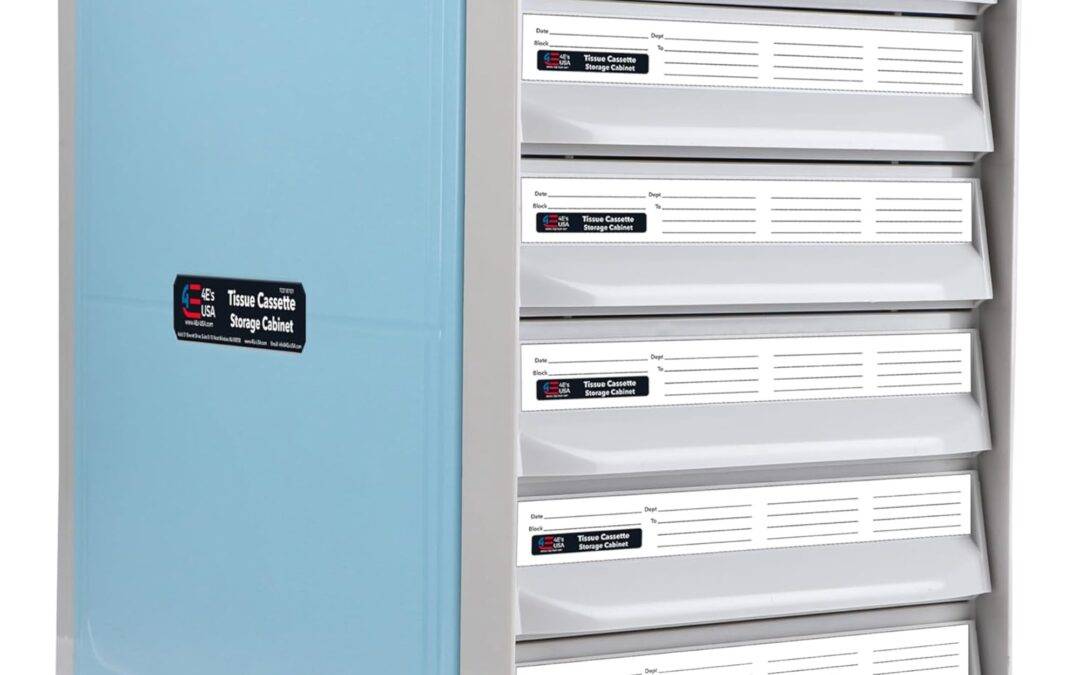
Tissue cassette storage works best when every archived block has a defined location. A cabinet provides space, but a consistent filing process helps staff use that space effectively.
If your lab is adding storage or reorganizing an existing archive, start with how blocks move in and out of the collection.
Review the Archive Before Buying Storage
Record the number of blocks currently stored, the space remaining, and the volume added during a typical month. Include any overflow areas so your estimate reflects the entire archive.
Check which cassette and block formats you need to accommodate. Ask whether the listed storage capacity applies to the sizes your lab uses.
Your lab’s applicable retention requirements should guide how much material remains in the archive and for how long.
Choose a Clear Location System
Use a repeatable way to identify cabinets, drawers, and smaller storage sections. For example, a location could read Cabinet B, Drawer 4, Section 2.
Keep those location details in the approved tracking system alongside the specimen’s existing identifier.
Choose a filing sequence your team can maintain, such as accession order within a defined year. Document how exceptions are handled so an unusual case does not become difficult to locate.
Compare Storage Formats
LabStore’s tissue cassette storage category includes corrugated units, modular drawers, tissue block cabinets, and high-density cabinets.
Consider the questions each option needs to answer:
- Does it fit the available room?
- Can staff read the labels easily?
- Can you add capacity as the archive grows?
Measure access space as well as the storage footprint. Confirm the product’s load limits and installation requirements before deciding where it will go. Follow your lab’s environmental storage procedures for archived material.
Track Retrieval and Return
Define how staff record a block’s removal, current destination, and return to storage. Use the same process across shifts.
A clearly marked return area can give staff a place to hold items awaiting refiling, provided each item remains traceable.
After reorganizing, test the system with several retrieval requests. Check whether the recorded location matches the physical location and whether staff can return each block without guessing.
Build a Storage Plan That Can Grow
Review remaining capacity on a regular schedule, before overflow becomes routine.
Browse LabStore’s tissue cassette storage options to find a format that supports your filing process and available space.